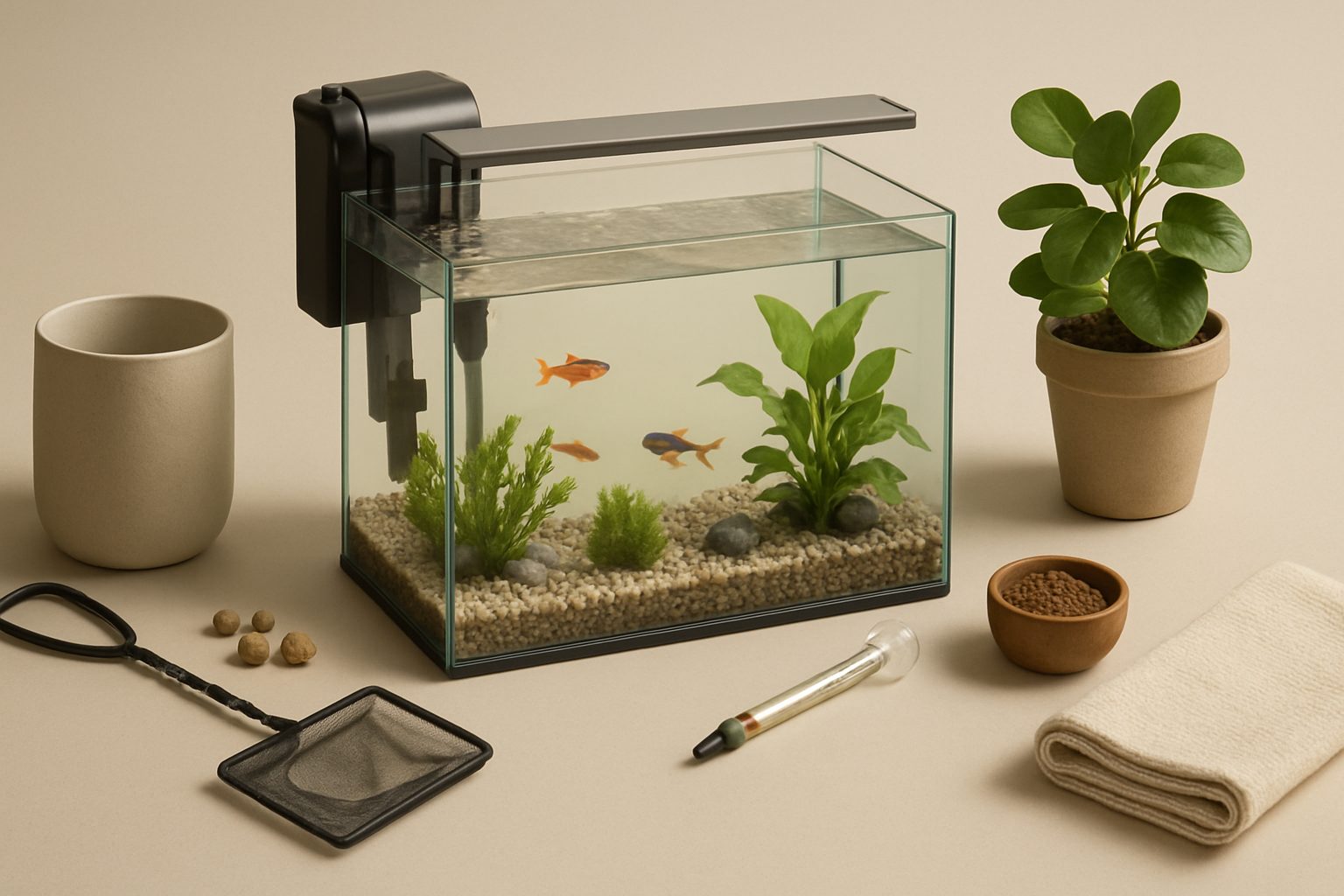
Aquarium Maintenance Schedule UK: Weekly, Monthly and Seasonal Fish Tank Care Tasks
Keeping an aquarium in good condition isn't complicated, but it does require a consistent routine. Whether you're running a 30-litre starter tank or a 200-litre community setup, sticking to a maintenance schedule prevents most common problems—algae blooms, poor water quality, fish stress, and equipment failure. The key is knowing which tasks matter each week, which can wait until the end of the month, and which are easy to forget until something goes wrong.
This guide breaks down the essential maintenance cycle so your tank stays stable and your fish stay healthy. You don't need expensive equipment or complicated testing; you just need to know what to check and when.
Weekly Fish Tank Maintenance
The weekly routine is about observation and basic care. Spend 15–20 minutes on these tasks.
Check fish health and behaviour. Look for signs of stress, disease, or injury. Healthy fish should eat eagerly, swim normally, and maintain their usual activity level. Watch for torn fins, white spots, gasping at the surface, or hiding. Catching problems early makes them far easier to treat.
Remove uneaten food and dead plant matter. Food left over after a few minutes decays and fouls the water. Dead leaves and debris do the same. Use a net or your hand to remove visible waste each day, or at least before each water change.
Feed appropriately. Most fish do best on a consistent schedule—once or twice daily, depending on species. Give only what they'll eat in 2–3 minutes. Overfeeding is the most common beginner mistake, leading to water quality problems and bloated fish.
Top up water levels. Evaporation lowers water level in a few days, especially in summer or with strong lighting. Top up with tap water (already dechlorinated if your tap water sits for 24 hours) or treated water to bring the level back to normal. This is not a water change; it's just replacing water lost to evaporation.
Check equipment. Make sure the filter is running, the heater is warm if you have one, and the air pump (if present) is bubbling. If something has stopped working, fish can go downhill fast.
Monthly Fish Tank Maintenance
The monthly tasks require a bit more work—plan for 30–45 minutes.
Perform a partial water change (25–30%). This is the single most important maintenance task. Use a gravel vacuum (also called a siphon or aquavac) to remove water from the bottom of the tank while stirring the substrate to release waste trapped in the gravel. The gravel vacuum removes organic waste without needing to remove all the fish. Replace the water with treated water at the same temperature. This removes nitrate buildup, uneaten food, and fish waste that the filter can't process completely.
If you keep a heavily stocked tank, do 25% monthly. If you're lightly stocked or your water tests show low nitrate, 20% is enough.
Test water parameters. Get a basic aquarium test kit—a liquid kit for ammonia, nitrite, nitrate, and pH is far more reliable than strips and costs around £15–20 on Amazon UK. Test after the water change:
- Ammonia and nitrite should always be 0 ppm. If they're not, your filter isn't established or you're overfeeding.
- Nitrate will creep up between water changes; 40 ppm or less is healthy. Above 80 ppm, increase water change frequency.
- pH depends on your fish, but stability matters more than the exact number.
Clean the filter. Every 4–6 weeks, take the filter media (foam, cartridge, or sponge) and rinse it in old tank water or a bucket of dechlorinated water. Never use tap water—it kills the bacteria colony that breaks down fish waste. Cleaning removes trapped debris and keeps water flow strong. Don't replace the media; just rinse and reuse it. Replace media only when it's visibly falling apart or flow has dropped significantly.
Check and adjust equipment. Inspect the heater thermostat, check air pump stones for blockages, and ensure the filter intake isn't sucking in plants or debris. Look for salt creep (white mineral deposits) around the tank rim and wipe it down.
Seasonal and Quarterly Tasks
These jobs crop up every few months or with seasonal changes.
Replace filter media if needed. If rinsing no longer restores flow, or if the media is disintegrating, swap it out. A new foam cartridge or sponge costs £5–10 and keeps filtration efficient. Do this when you replace the media, not routinely.
Deep clean the substrate. Once or twice a year, do a more thorough gravel clean using your gravel vacuum. Spend extra time stirring and vacuuming to remove sludge that builds up under decorations and in dead zones. This is especially useful if you notice poor water quality or algae problems that won't shift with standard maintenance.
Inspect hardscape and decorations. Look for sharp edges, cracks, or deterioration in rocks or wood. Remove anything that could harm fish or trap food. If using driftwood, it will eventually soften and shed tannins; if that's unwanted, replace it.
Adjust feeding and routines for season. In summer, tanks warm up naturally and need more careful monitoring to avoid overheating. In winter, heating costs rise but fish activity often drops, so feeding can be reduced slightly. Longer daylight also triggers more algae growth in spring and summer; slightly reduce light hours if it becomes a problem.
Review and upgrade if needed. Use seasonal reviews to spot worn-out equipment, consider whether your stocking level is still appropriate, or plan upgrades. Replacing an old heater or air pump before it fails saves stress.
Keep It Consistent
The best maintenance schedule is one you'll actually follow. Many aquarists succeed with a simple system: water changes and gravel vacuuming every Sunday, quick daily checks, and a monthly test kit check. Others do smaller changes weekly. Whatever rhythm works for you will work for your fish—consistency matters far more than the exact dates.
Investing in a simple gravel vacuum, a liquid test kit, and a reliable heater removes most of the guesswork. These tools cost modest money but save you time and prevent expensive disasters. Stick to this routine and you'll spend far less time fixing problems and far more time enjoying a healthy, thriving tank.
More options
- Fluval Flex Aquarium Kit (Amazon UK)
- Juwel Fish Tank Range (Amazon UK)
- Aquael Leddy Aquarium Set (Amazon UK)
- API Freshwater Master Test Kit (Amazon UK)
- Dennerle Nano Cube Aquarium (Amazon UK)