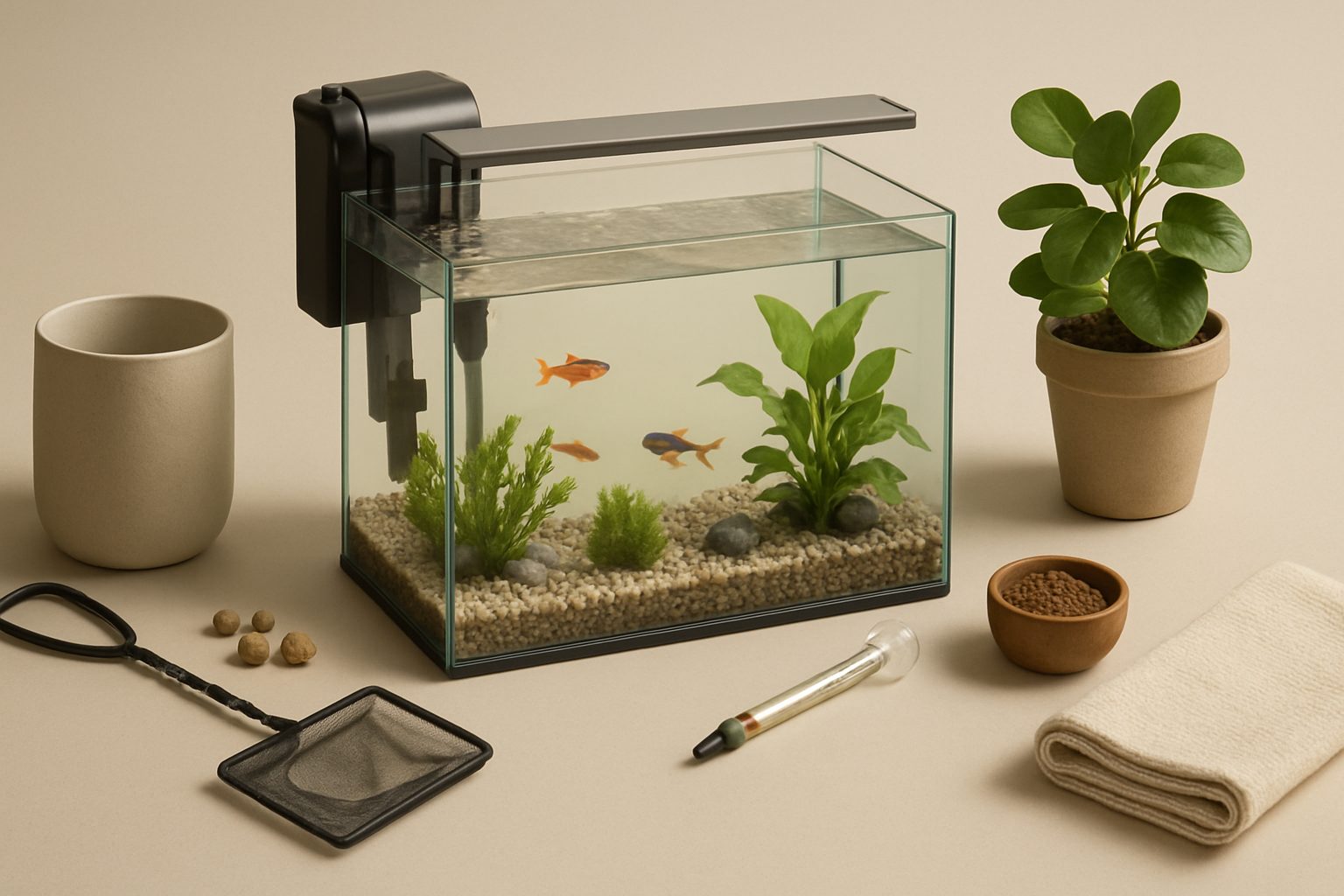
Best Fish Tanks UK 2024: Top Aquariums for Every Budget and Fishkeeper
Choosing the right fish tank depends less on brand hype and more on matching the setup to your space, budget, and commitment level. Whether you're a complete beginner or upgrading from a 20-litre starter kit, this guide covers the realistic options across UK retailers.
What Makes a Good Fish Tank?
Before diving into specific models, understand what actually matters. Tank volume is crucial — the common myth that bigger tanks are "harder to maintain" is backwards. Larger volumes are more stable. A 180-litre tropical tank is genuinely easier to keep balanced than a 30-litre nano.
Glass versus acrylic: UK retailers stock both. Glass is scratch-resistant and cheaper; acrylic is lighter and won't shatter, but scratches easily and discolours over time. For most home setups, glass is the sensible choice.
Filtration is where budget often fails beginners. A £300 tank with a £40 filter will disappoint you. Invest in filtration rated for 1.5–2× your tank volume. This isn't optional if you want stable water parameters and healthy fish.
Nano Tanks (10–30 Litres)
These suit flat spaces and starter fishkeepers. A 30-litre planted nano with a decent internal filter works well for hardy species like cherry barbs or harlequin rasboras. Popular models include the Fluval Spec and Juwel Lido — both compact, reasonably reliable, and widely available.
The honest limitation: nano tanks forgive fewer mistakes. Water parameters shift faster. If you miss a water change or overfeed, ammonia spikes happen within days rather than weeks. Not ideal for learning, despite the appeal of desk-friendly size.
Tropical Tanks (60–120 Litres)
The most popular category in the UK, and for good reason. A 90-litre tank (roughly 90cm × 30cm × 40cm) handles community fish reliably: tetras, corydoras, rasboras, and peaceful gouramis all coexist sensibly. Brands like Aquael, Fluval, and Juwel dominate this bracket.
A 90-litre setup with a canister filter (Fluval FX4 or Aquael Turbo) will cost £400–600 all-in, including heater, lighting, and substrate. It's the Goldilocks zone for hobbyists: stable enough to handle minor lapses, spacious enough to keep several species, and not so vast that water changes feel laborious.
Most tropical tanks in this size run at 24–26°C. If you go smaller (60 litres), watch temperature stability — tiny heaters struggle in winter without meticulous monitoring.
Coldwater Tanks (60–150 Litres)
Underrated in the UK despite our climate being ideal for them. Goldfish and fancy goldfish need far more space than the stereotypical bowl, but they don't need heating, which saves money and electricity long-term.
Realistic stocking: one fancy goldfish per 40 litres. So a 120-litre tank suits two or three. Coldwater tanks actually benefit from being larger because goldfish produce tremendous waste. Your filter must be oversized. A 120-litre setup with a Fluval FX4 and good mechanical media will run roughly £500–700 and remain stable.
The downside: fewer visual "aquascaping" options. Coldwater plants are sparse, and decor gets shredded. Most keepers prioritise function over aesthetics, accepting a fairly bare tank.
Marine Tanks (90–180 Litres)
Marine setups are expensive and demand precision, but they're not impossible for committed hobbyists. Budget £1500–3000 for a proper 120-litre marine tank: protein skimmer, powerheads, marine-grade filtration, and live rock are non-negotiable.
Salinity and pH must stay stable. One equipment failure — a failed heater or powerhead — kills your fish and invertebrates within hours. This isn't theoretical; it happens regularly. You need redundancy: two heaters, backup circulation.
UK retailers stock marine-specific equipment, and there's a passionate community, but this is not a "starter" category. Honestly assess whether you're genuinely prepared for the daily maintenance and the financial hit if something goes wrong.
Key Features Worth Paying For
Integrated filtration: Tanks with built-in filter compartments (many Aquael and Juwel models) simplify setup and save space. You're paying perhaps £50–100 extra, but it's genuinely convenient.
LED lighting: Standard now. Cheaper models flicker or have poor colour rendering; mid-range LEDs (£80–150) are fine for planted tanks and general viewing. Avoid the smallest, brightest "budget" LEDs — they'll annoy you.
Heater quality: A £15 heater might fail within a year. Invest £40–60 in something reliable. Submersible heaters from Fluval or Aquael rarely malfunction.
Substrate: Don't cheap out. Bad substrate harbours debris and decays, fouling your water. Aquasand and Flourite are reliable; avoid coloured pea gravel — it doesn't hold nutrients and looks cheap.
Realistic Maintenance
A tropical 90-litre tank needs a 25–30% water change weekly and filter cleaning fortnightly. If that sounds tedious, consider a larger tank: 120–150 litres reduces frequency slightly. If even that feels like too much, honestly reconsider whether fishkeeping suits your lifestyle.
Algae growth is normal. Excess algae means overfeeding or poor filtration — not a tank "defect."
Budget Tiers
- Beginner (£250–450): 60–90-litre tropical setup, internal filter, basic lighting.
- Intermediate (£500–1000): 90–120-litre tropical with canister filter, better lighting, aquascaping elements.
- Advanced (£1200+): Planted tanks, marine systems, or large coldwater setups.
Final Thoughts
The best tank is the one you'll maintain consistently. A £400 setup you're committed to outperforms a £1500 setup you neglect. Start realistic: match tank size and type to your space and genuine interest level. Oversized filtration, stable temperature, and regular maintenance beat expensive brands and elaborate decor every time.
More options
- Fluval Flex Aquarium Kit (Amazon UK)
- Juwel Fish Tank Range (Amazon UK)
- Aquael Leddy Aquarium Set (Amazon UK)
- API Freshwater Master Test Kit (Amazon UK)
- Dennerle Nano Cube Aquarium (Amazon UK)