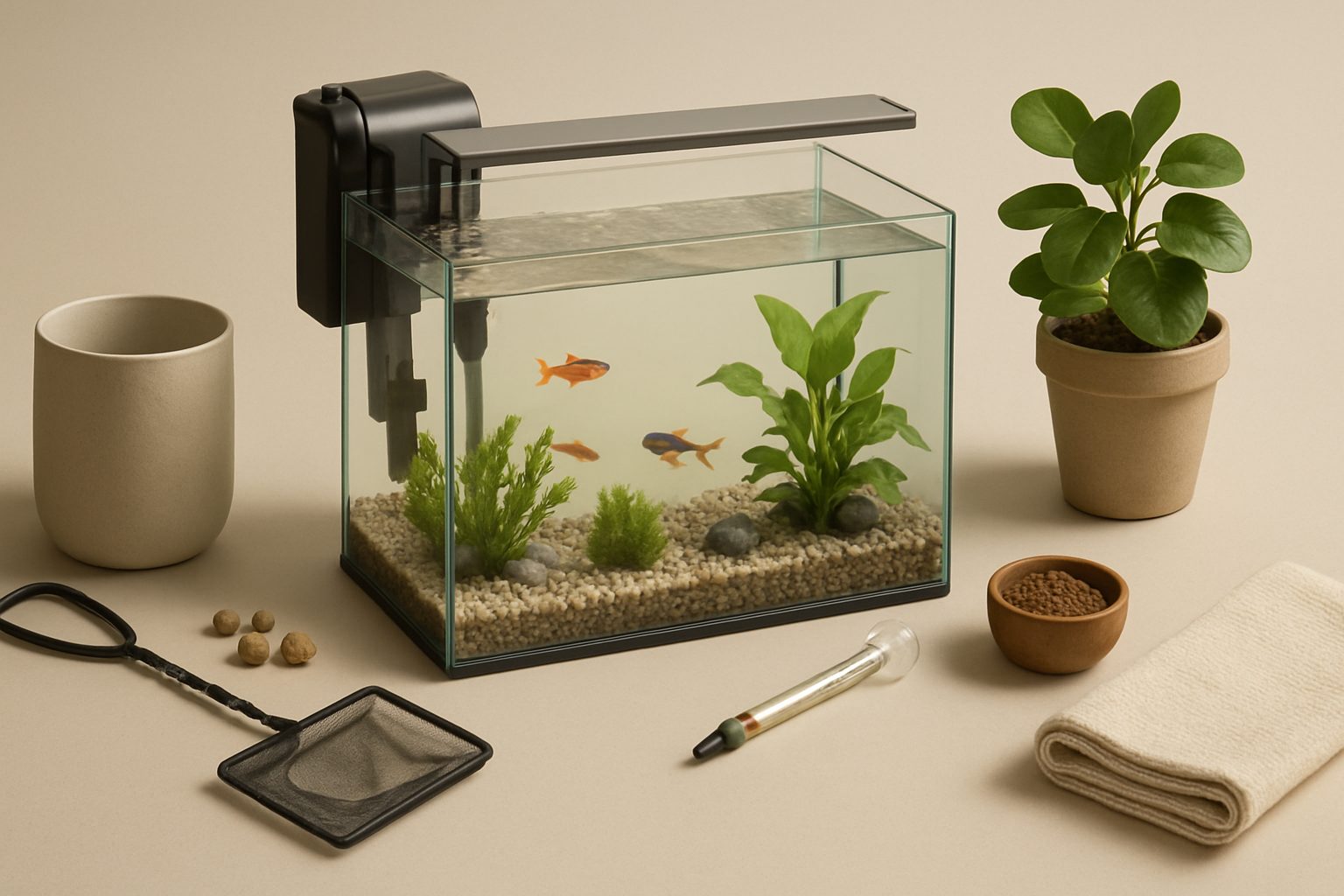
Goldfish Tank Setup Guide UK: How to Set Up a Coldwater Aquarium for Goldfish
Goldfish have a reputation for being hardy, low-maintenance pets you can keep in a bowl. That reputation is wrong. A properly set up goldfish tank requires more space, filtration, and attention than most people expect. If you're genuinely interested in keeping goldfish healthy and watching them thrive for a decade or more, this guide will walk you through everything you need.
The Tank Size Myth
The most common mistake is underestimating how much space goldfish need. You'll hear they can live in a 20-litre bowl or small tank. In reality, fancy goldfish (the round, short-tailed varieties) need a minimum of 50 litres for the first fish, plus 25 litres for each additional one. Common goldfish, the sleeker variety, need 75 litres for the first fish and 35 litres each thereafter.
Why so much? Goldfish are messy eaters and heavy waste producers. They churn up debris constantly, creating a significant biological load. A cramped tank rapidly accumulates harmful nitrogen compounds—ammonia and nitrite—even with regular water changes. Inadequate space leads to stunted growth, damaged gills, and short lifespans. Fish kept in tiny tanks rarely make it past a year or two.
Filtration for Heavy Waste
This is where goldfish care deviates sharply from what many people assume. Your filter is not optional, and it must be robust.
A goldfish tank needs filtration rated for 1.5 to 2 times the tank volume per hour (measured in litres per hour, or LPH). So a 100-litre tank should have a filter turning over 150–200 LPH minimum. This might sound overkill compared to tropical community tanks, but goldfish genuinely justify it.
Mechanical filtration (foam, sponge, or filter floss) removes visible waste and must be cleaned or rinsed weekly in old tank water. Biological filtration (beneficial bacteria colonising the filter media) breaks down ammonia and nitrite. Your filter should include plenty of media surface for bacteria to establish—sponges work well, as do bio-balls or ceramic cartridges.
Undergravel filters are popular with goldfish keepers because they encourage beneficial bacteria throughout the substrate and help prevent waste from accumulating in dead zones. If you choose an undergravel filter, couple it with a powerhead to maintain flow.
Substrate and Decorations
Use a fine gravel (2–3 mm) rather than sand, which compacts too easily and traps waste. Rocks and driftwood are fine, but avoid sharp edges that could damage the fish's scales. Goldfish are curious and destructive—they'll dig, uproot plants, and crush delicate ornaments. Keep decorations minimal and robust.
Live plants are possible but not essential. Goldfish uproot and eat plants readily, so you'll likely end up with bare substrate anyway. If you want greenery, hardy species like Java fern or Anubias can survive if anchored to rocks or wood, but expect damage.
Water Parameters and Temperature
Goldfish are coldwater fish; they do not need a heater and thrive in temperatures between 18–24 °C. Most UK homes sit comfortably in this range year-round, though unheated tanks may dip below 18 °C in winter. A chiller is rarely needed unless your room temperature climbs above 26 °C.
Test your water regularly with a reliable kit. Ammonia and nitrite must be 0 ppm; nitrate should stay below 40 ppm. Perform a 25–30% water change weekly to manage nitrate and maintain water quality. If your nitrate creeps above 40 ppm despite partial changes, you're likely overfeeding or the tank is overstocked.
pH between 7.0 and 7.4 is ideal. Goldfish are adaptable, but consistent parameters matter more than perfect ones.
Feeding and Daily Care
Feed once or twice daily, only as much as the fish will consume in 2–3 minutes. Overfeeding is the biggest driver of poor water quality. Goldfish food specifically formulated for coldwater fish works best; avoid tropical fish pellets.
Daily checks should include observing behaviour (appetite, swimming, interaction) and checking filter and heater function if you have one. Skim any uneaten food or decaying waste from the surface. Weekly tasks include rinsing the mechanical filter and performing the partial water change.
Indoor Tank vs Pond
A well-maintained indoor tank gives you full control over temperature and water quality, making it easier to manage. However, goldfish grow to 20–30 cm and genuinely enjoy space—an outdoor pond is their ideal habitat if you have one and the climate allows it.
A goldfish pond should be at least 100 litres, deeper than 60 cm to prevent freezing solid in winter, and fitted with a pump and filter. Ponds require less frequent water changes once established, but maintenance is heavier in spring and autumn when debris falls in. A pond is a long-term commitment; goldfish in ponds often outlive those in indoor tanks.
Common Mistakes to Avoid
Don't overstock. More fish means exponentially higher waste and a harder time maintaining chemistry.
Don't assume the fish will tell you when something's wrong. By the time you notice symptoms like gasping or clamped fins, the water quality has already deteriorated significantly.
Don't skip the filter. Some keepers try aquariums with only an air stone; this is insufficient.
Don't do 50% water changes too frequently. Frequent large changes can swing pH and temperature unpredictably, stressing the fish.
Getting Started
Start with a 100-litre tank minimum if you want more than one goldfish. Invest in a good filter, a reliable thermometer, and water testing kit. Allow 3–4 weeks for the filter to cycle before adding fish. Add one goldfish first, then the second a week or two later to let the bacterial colony stabilise.
Goldfish kept properly are rewarding pets—they recognise their owner, show personality, and live 15–20 years or longer. That longevity only happens if you set them up right from the start.
More options
- Fluval Flex Aquarium Kit (Amazon UK)
- Juwel Fish Tank Range (Amazon UK)
- Aquael Leddy Aquarium Set (Amazon UK)
- API Freshwater Master Test Kit (Amazon UK)
- Dennerle Nano Cube Aquarium (Amazon UK)