How to Choose the Right Aquarium Filter for Your Fish Tank UK
Getting filtration right is one of the most important decisions you'll make as an aquarium keeper. A decent filter turns what would be a toxic bowl into a thriving ecosystem, but the sheer variety of options on the UK market can feel overwhelming. This guide breaks down the main types so you can pick one that actually suits your tank and fish.
Why Filtration Matters
Your filter does three jobs: it traps physical waste (fish poo, uneaten food), it provides surface area for beneficial bacteria to colonise, and it keeps water moving so oxygen reaches everywhere. Without it, ammonia and nitrite build up and poison your fish. That's non-negotiable. The question is just which type gets you there without being overkill or undersized.
Sponge Filters
The simplest option. A sponge filter is an air stone attached to a sponge block—air bubbles rising through create gentle water flow that pulls detritus into the sponge, where bacteria does the chemical work.
Best for: small tanks (under 40 litres), fry tanks, and shrimp setups where you want minimal water movement. They're also nearly indestructible and cost £5–£15.
Downsides: they're slow at mechanical filtration and need daily squeezing in old tank water to stay effective. In anything above 60 litres they'll struggle to keep up. They also look like a sponge in your tank, which some people don't mind and others find unattractive.
Internal Filters
A motorised box that sits inside the tank. Water enters the sides, passes through foam and filter media, then exits. Common in budget all-in-one kits.
Best for: beginners wanting something small and cheap (£20–£40). They work fine for nano tanks and goldfish bowls if you're willing to rinse the media weekly.
Downsides: they're a pain to maintain because you have to reach into the tank constantly. They also reduce usable space and can clog quickly. Internal filters are honest workhorses for tiny setups, but if you've got room for anything bigger, skip this.
Hang-on-Back (HOB) Filters
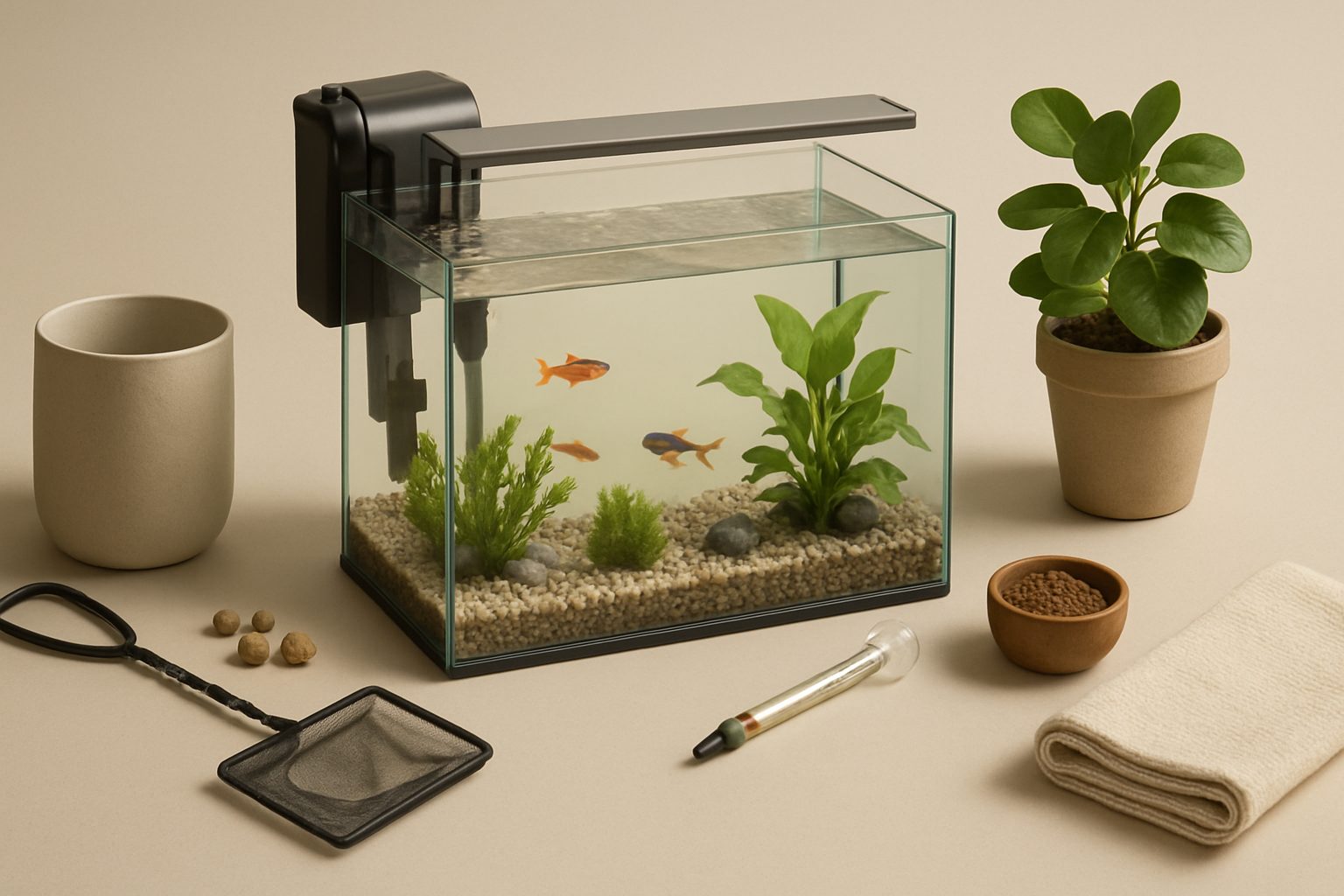
These clip onto the tank rim with an intake tube going down into the water and an outflow waterfall. You'll see brands like Tetra EX and Fluval Spec in most pet shops.
Best for: tanks between 40 and 120 litres, especially planted tanks where a gentle return is nice. They're easy to maintain (just rinse the cartridge once a month), relatively affordable (£30–£80), and compact.
The honest bit: most HOB cartridges are mediocre. They clog fast and don't house much bacteria. If you pick one up, replace the cartridge media with coarser sponge and activated carbon—it'll perform much better. Some people also struggle with water evaporation creating a siphon break, or noise if the intake gets exposed to air.
Canister Filters
A sealed cylinder under or beside the tank, fed by one hose and returned by another. Fluval and Eheim dominate this market in the UK.
Best for: larger tanks (100+ litres), planted tanks, and anyone who wants excellent mechanical filtration without daily faffing. The Fluval 307 is reliable and costs around £70–£90. The Eheim Classic is pricier (£120–£150) but runs quieter and lasts longer.
Why they're worth it: canisters hold far more media than anything else. You can stack sponge, ceramic rings, and charcoal, giving you mechanical and biological filtration in one unit. They're also invisible—just pipes in and out. Maintenance is genuinely every 4–6 weeks instead of weekly.
The catch: they're messier to set up (you'll get water on the floor), they need priming to start, and if something goes wrong you're doing wet work on the carpet. They're also overkill for small tanks. And cheap canister clones from budget brands often leak or clog badly.
All-in-One Kits
Some modern tanks come with built-in filtration—integrated in the back of the tank or as a hang-on sump. Fluval Spec, Juwel, and AquaOne all make these.
Best for: people who want convenience and don't want to research five different parts. They look integrated and professional.
Reality check: you're paying a premium for the tank-and-filter package. The filter component is usually decent enough but rarely excellent. Upgrade the media anyway.
Matching Filter to Tank
- Under 40 litres: sponge or internal filter. Budget option, no debates.
- 40–80 litres: HOB with upgraded media, or a compact canister.
- 80–150 litres: canister filter (Fluval 307 is the sweet spot for price and performance).
- 150+ litres: dual canisters, or one larger canister plus supplementary circulation.
The rule of thumb is turnover: your filter should process the entire tank volume 4–6 times per hour. A 100-litre tank needs a filter rated for 400–600 litres per hour. Most UK shops list this clearly.
Final Thoughts
Don't buy based on what looks best in marketing photos. Ask yourself: how often do I want to maintain this, and how much space can I spare? A sponge filter in a small tank works brilliantly. A canister in a 150-litre goldfish tank is sensible. An internal filter in anything over 80 litres is a false economy because you'll be cleaning it every three days and it'll still fall behind.
Check the UK distributor's website or a local aquatics shop for specific flow rates, media capacity, and noise levels before you commit. Your fish don't care what brand you choose—they only care that the ammonia stays at zero.
More options
- Fluval Flex Aquarium Kit (Amazon UK)
- Juwel Fish Tank Range (Amazon UK)
- Aquael Leddy Aquarium Set (Amazon UK)
- API Freshwater Master Test Kit (Amazon UK)
- Dennerle Nano Cube Aquarium (Amazon UK)